

Gille Klabin, Clay Elliott & Cameron Fife Talk WEEKEND AT THE END OF THE WORLD and Blending Horror with Comedy

By Shannon McGrew
In WEEKEND AT THE END OF THE WORLD, two lifelong friends, Karl (Clay Elliott) and Miles (Cameron Fife), who can’t keep a relationship or a job, find themselves with an opportunity to get rich by flipping Miles’ Meemaw’s cabin, and turn their lives around. However, the cabin and Meemaw have different plans as Miles and Karl are forced to face both their metaphorical and very real demons.
For WEEKEND AT THE END OF THE WORLD, Creepy Kingdom’s Shannon McGrew spoke with co-writer/director Gille Klabin (The Wave), co-writer/actor Clay Elliott (“Karl”), and actor/producer Cameron Fife (“Miles”). During our chat, they discussed everything from the film's DIY origins and blending horror with comedy to casting Thomas Lennon and building the lifelong friendship at the center of the story.
Thank you all so much for taking the time to speak with me today. This film was such an entertaining, psychedelic, yet heartfelt, trip that had me laughing and asking, ‘What in the fck is going on?’ but in the best way possible. That said, what was the initial spark for the film?
Gille Klabin: Clay and I were making a lot of short-form, weird sketch stuff and just leaning into our strengths. I think Clay is an incredible performer and a brilliant comedy writer, and I love my visuals. Clay was contemplating throwing in the towel after years of the brutality of the acting business. I had just done The Wave and was frustrated trying to get another big machine moving again. Because I’m a nerd and can theoretically make a movie by myself, I was like, ‘Well, why don’t we just do something small and lean into what we have?’ We basically used everything at our disposal.
We wanted to write a comedy with very few characters, locations, and something we could theoretically shoot on weekends with our own means. Having just done the festival circuit, I was telling Clay, ‘Look, if we dip our toe into horror, it is the most ravenous, forgiving audience.’ Considering we’re probably going to have to make this movie for $0, that’s the kind of audience that will maybe look past some of our budgetary shortcomings and will see the film for what it is. Clay’s family has a cabin that’s five or six hours north of Los Angeles, and Clay has certainly told me it’s haunted [Laughs].
Clay Elliott: It’s a beautiful place right in the middle of the woods. During the day, you can hike and fish, and the cabin is a little A-frame. My grandfather literally built it by hand; it’s just this gorgeous place by day. Then, when the sun goes behind the earth, it becomes the most terrifying place that I know. Since I was a little kid up through my current age, it’s kind of one of those places where we go to bed, and there are these rafters up above that, so it’s a space that looks down. From the age of four until still today at 40, as soon as everyone says goodnight, my eyes get wide, and I’m expecting to see someone looking down at me. It’s just this beautifully haunting, horrifying place. It made sense to make something there.
Clay and Cameron, your characters have this longstanding best friend energy. It felt very lived in. How did you both build that history? Was it already on the page, or did you develop it together during production?
Cameron Fife: It was definitely on the page. One thing we figured out as we met and started working together was that Clay and I are about 10 minutes apart from each other. We went to rival high schools. We’re both big sports guys. Clay went to college with a bunch of people that I know. So, we already had this built-in rapport and a built-in base. I remember there was one day when we decided to go to the beach to read lines. It was in the middle of summer, and it was nice. We went to the beach, and we definitely didn’t look at the script. We hung out at the beach for a couple of hours and had a couple of beers, and that was the best way to do it. It made more sense cause if we’re friends in real life, then that’s going to show on screen.
Clay Elliott: Cameron and I didn’t meet until about two months before we started filming. To speak to the on-page aspect of it, I think one thing Gil and I needed to do with this script, because this movie can become untethered pretty quickly, is ground the relationships. They needed to be real. You needed to root for these people and understand why they’re friends. We wanted to be very specific and not just be like, hey, these guys are friends, but like what type of friends are they that would lead you to be able to go and do some of this, have this kind of banter, this kind of trust. It really became that lifelong friend, that person that you’ve known since childhood, where you’re somewhere between friendship and family. They drive you nuts in a way that other friends can’t, but they’re always your first call. That was what we wanted to attack on the page. To Cameron’s point, I think once we realized how little time we had to get ready to shoot, we knew we just needed to build our friendship, rapport, and an understanding of our humor so that when we got there, we had this really good foundation.
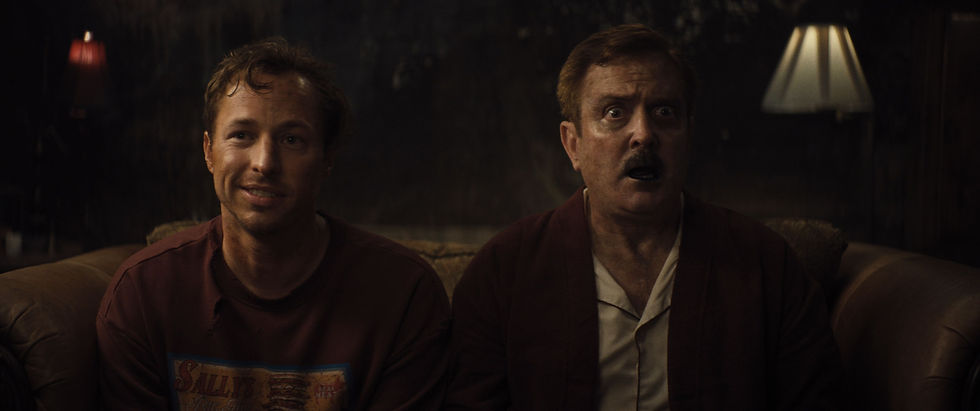
In regard to the rest of the cast, Thomas Lennon already carries a certain expectation when he’s on screen. What was it like bringing him into this world as Hank and playing with that familiarity?
Cameron Fife: I worked with Tom on a movie a few years ago, and it was a great experience. He was so kind, and we stayed in touch. Over the years, I’ve sent him stuff, or I’d run into him at things, and he’s always so warm and friendly and open to everything. When I first started meeting with [Gil and Clay], and they were talking about the cast, I asked who they had in mind for Hank. They mentioned that their dream cast would be someone like Thomas Lennon. I was like, ‘I know Tom. I can email him right now.’ They were like, ‘I don’t know, we’re not ready to make an offer,’ and I was like, ‘You don’t have to worry about any of that stuff.’ I emailed Tom to let him know I was doing a new movie in the fall, and there was a fun role for him if he wanted to take it. He wrote back two minutes later and was like, ‘Yeah, I’m in.’ I took a screenshot, texted it to [Gil and Clay], and said, ‘Tom’s in.’ They were both like, ‘No way! It’s not that easy! It doesn’t work that way!’ And I was like, it does with Tom.
Gille Klabin: I was like, ‘He hasn’t read the script. What do you mean he’s in?’ [Laughs].
Cameron Fife: I think that was about a month before we did the first table read, where Tom came in, and everybody met each other. I want to say every two days, Gil would be like, ‘So has Tom read the script? Is he going to read it and then say no?’ I was like, ‘I’m pretty sure he has not read the script, and if he said he is in, then he’s in.’
Gille Klabin: We had the first table read at my house, and he came through the door and was like, ‘Hey, I’m Thomas Lennon.’ And I’m like, ‘I’m Gil, I’m so happy to have you here.’ And he was like, ‘Yeah, I wanted to come by because it felt like it was better to say it in person that I’m out. I don’t want to be involved.’ And I was like, ‘I mean, look, man, that makes sense, I don’t know why you’re here either.’ [Laughs].
Tom’s written books and movies, and written massive franchises, and has been in infinity films, and he came in with such keen collaborative energy. He pitched us so many ideas after the table read and after rough cuts of the movie on set, all of them with a comprehensive understanding of exactly what we were trying to do. When Hank gets possessed, Meemaw was going to turn him back into a friendly, normal Hank, but he’s still her herald. It was his idea for Hank to be turned halfway, so Hank’s in there, but he’s still the demon. I remember Clay and me being like, ‘Whatever you want!’ [Laughs].
Clay Elliott: When we realized we had Thomas Lennon coming, I think Gil and I’s response was like, ‘Well, we need to write more for Thomas Lennon, we need to set up situations where he can improv and do his thing.’ And for him to come and be like, ‘This is great, but it would be funnier, and what I enjoy more is having fewer lines. And we were like, ‘Whatever you want, you are the man.’
As highly entertaining as this movie is, what do you think will stick with audiences most once the film ends?
Clay Elliott: I hope what sticks is that when they thought we were going one direction, we went the other. Speaking to the subverting of expectations means a lot. It’s a comedy horror with the emphasis on the comedy, but we really wanted to respect and stay true to the horror aspects as well because, again, it’s such a ravenous, awesome, dedicated fan base. If I heard people say it subverted their expectations, and there were some great scary moments, I’d be like, we did it.
Gille Klabin: Just to know that you set out to do something and it actually landed the way you intended, which has always been that I really cared about those characters, I laughed a ton, and I didn’t see it coming. It’s that little trifecta. That was every intention, every consideration at every junction was in the pursuit of those three goals. And we have heard that a lot from audiences and even the Letterboxd reviews. For some people, obviously, their goal in life is to spread hate, but even those who [reviewed on] letterboxed don’t deny the chemistry between Cameron and Clay. They don’t deny they were surprised by it. They don’t deny that there were laughs.
Keep an eye out for WEEKEND AT THE END OF THE WORLD, which is expected to drop this Spring.
