Charlie Polinger and Joel Edgerton on Turning Childhood Cruelty Into Horror in THE PLAGUE
By Shannon McGrew
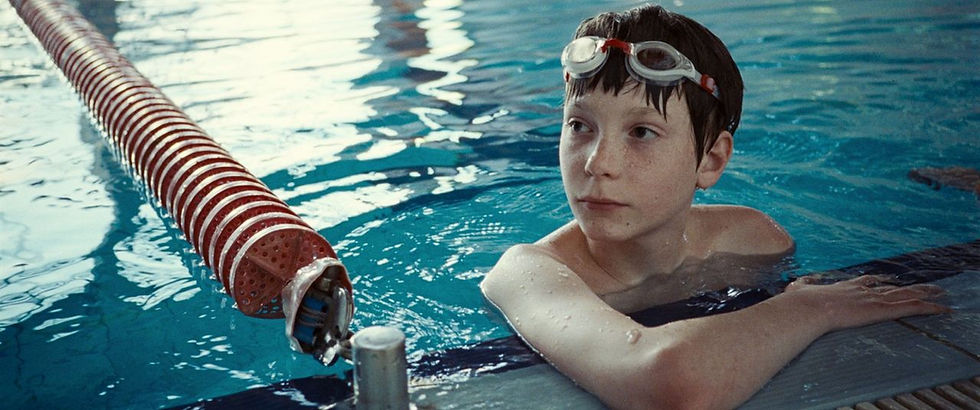
In THE PLAGUE, at an all-boys water polo camp, Ben (Everett Blunck), a socially anxious twelve-year-old, is pulled into a cruel tradition targeting an outcast, Eli (Kenny Rasmussen), with an illness they call “The Plague.” But as the lines between game and reality blur, Ben fears the joke might be hiding something real.
For the release of THE PLAGUE, Creepy Kingdom’s Shannon McGrew spoke with director Charlie Polinger and producer/actor Joel Edgerton. During their chat, they discussed everything from transforming childhood cruelty into psychological horror to the ways masculinity, power, and fear shape us long before adulthood.
Thank you both so much for taking the time to speak with me. To start, how did you both come together to work on this film?
Charlie Polinger: I’d written the script and was trying to figure out how to get a film like this made. An agent of mine brought it to Joel and felt Joel would connect with stories like this about young boys and these dynamics. Joel read it and connected with it, so we got on a call right away, and he was generous enough to say he would be excited to do anything he could to help get this film made and to collaborate on it. He came on as a producer, but also to play this role of Daddy Wags, who’s the coach of the boys. He became involved in general by watching tapes, looking at the edits, and being there to help guide the film into the world.
Joel, what was it about Charlie’s script that grabbed your attention?
Joel Edgerton: We all have a relationship with how beautiful but often terrifying adolescence is, and the experience of school or summer camp. The first film I wrote to direct was The Gift, and it dealt with grown-ups reconnecting 20-something years after a really terrible bullying incident. Whenever I read about that subject or hear stories, there’s something in me that gets engaged. I think that’s why Houston sent me the script, because I would connect with the material. I immediately was really taken with not just the subject matter, but how Charlie had created this dynamic, particularly of the three boys: the ostracized boy, the ringleader of the group, and then this fresh, innocent child coming in the middle and going, I want to be kind, but in order to be kind I’m going to have a target on my back. The dynamic, particularly when he does start to give in to his kindness and feels ostracized himself, brings out a cruelty in him. I just thought it was so interesting. I felt like I was reading “Lord of the Flies” and “Full Metal Jacket.” I just really wanted to do whatever I could to see Charlie get his first film made because I had this feeling with the combination of what he’d written, plus the aesthetic of his short films, and seeing the confidence in his approaches as a filmmaker that he will be one of the people who is the future of American filmmaking.

Charlie, how did you find the tonal balance between keeping the movie grounded and seen through a kid’s perspective, while also building that tension so the viewer felt uncomfortable and stressed?
Charlie Polinger: I felt like keeping it grounded would be the thing that would keep it stressful. Obviously, there’s this score, and some of the cinematography is creating the feeling of Ben’s interior state, the voice in his head, and the anxiety and the paranoia. But I thought that if the performances felt grounded and real, the intensity would be heightened, and the suspense would be heightened even more. Navigating the reality of middle school or of 12- 13-year-old boys is as stressful a thing as possible. To immerse people in that, to get inside it, get the shot, see every glance, and shoot it in a particular way where we just had it all there, visually laid out, felt like it would fall into place naturally.
Joel, one of the things I love most about your character is that he presents a non-toxic form of masculinity. How did that perspective carry over into your experience wearing two hats on the film as both an actor and a producer?
Joel Edgerton: I’m glad you pointed that out. I do think it’s important to, as time goes on, really constantly reevaluate what our sense of masculinity is. Underpinning this whole film and perhaps underlying the theme of bullying becomes this question of, particularly when we are dealing with young boys, how do we raise our young men? How do I raise my son? I want him to be a good person in the world. I want him to be complicit in other people’s happiness rather than move through the world selfishly. Daddy Wags is neither a safe harbor, which makes Ben’s life even more dangerous; he’s not really the giver of amazing advice, and he’s a little bit of a failed grown-up in his own right, nor is he someone who’s like, button up your feelings, toughen up, suck it up. There’s a nice, beautiful hopelessness to Daddy Wags.
On the producing side of things, I wouldn’t ever presume to speak of myself as somebody who put this whole movie together and was running the show. Lizzie Shapiro and these wonderful, dedicated producers did that. Where I’m helpful as a producer is often in the early stages of things like this. I got involved in a documentary on Netflix last year called Daughters. It’s just working out where I can be helpful, and in this case, it was like, all right, there’s no other adult characters in the film, and Charlie’s faced with trying to finance a movie with a bunch of unknown kids or relative unknowns. It’s like, all right, if I could play this character and be on a couple of phone calls that are about trying to get finance involved and show my support. On a creative level, I felt like Charlie was making such excellent, kind of strong and intentional choices that I didn’t really have to ever feel like I was intervening or presuming to know better. I’m really happy that I get to be a part of this film, which I think is very special, and now Charlie and I are connected, and there’s a chance that we continue to work together in the future.
What does the film mean to you both, and what do you hope audiences take away from it when they leave the theater?
Charlie Polinger: It’s an exciting moment for me because it’s my first film and the first time I’ve had a film out in theaters. It’s like letting my child out into the world, and I’m excited for it to be something people can talk about. I’ve seen people leave screenings thinking about their experiences when they were this age, wondering whether they have kids and do this, which can be a little scary, but just to create conversations and have an experience in a theater. It’s really exciting to me that this has made it into theaters, and I think it’s been designed so it’s a really different experience when you see it on a screen with the sound and everything, and with other people there, than when you watch it at home. I’m just very grateful that’s how it’s going to be displayed to the world.
Joel Edgerton: For my part, I do think it’s very important in a way that this film has the hallmarks of a genre film, and I love that. There can be something to learn or reflect on in a movie without it bearing this banner: "This is an important message we’re sending into the world." The way Get Out did it, I thought Get Out was f**king great entertainment, but it also said something really valid and was exploring real, valid fears. In some ways, the idea of reflecting on how we were as kids and how we pass on our wisdom to a younger generation. I often think about what I want my kids to be in the world and how we help shape that. In a way, this film doesn’t presume to brandish that as the reason it was made, but it’s a potential delivery system for some good conversation about how we are in the world.
Charlie Polinger: Without giving too much away, I think it’s really looking at how one coping mechanism of feeling bullied or of feeling like a victim or feeling like an outcast is trying to gain power by bullying yourself, and I think that cycle goes around and around and is a huge part of the problem. It perpetuates cruelty, and it perpetuates bullying, and it perpetuates bad things, and to try to look at what are the ways out of that? How can you break that and opt out? Hopefully, leaving the theater, there’s at least a sense of thinking about what that could look like and the options with those cycles.
THE PLAGUE arrives theatrically in NY and LA on December 24, expanding wide on January 2, 2026.